

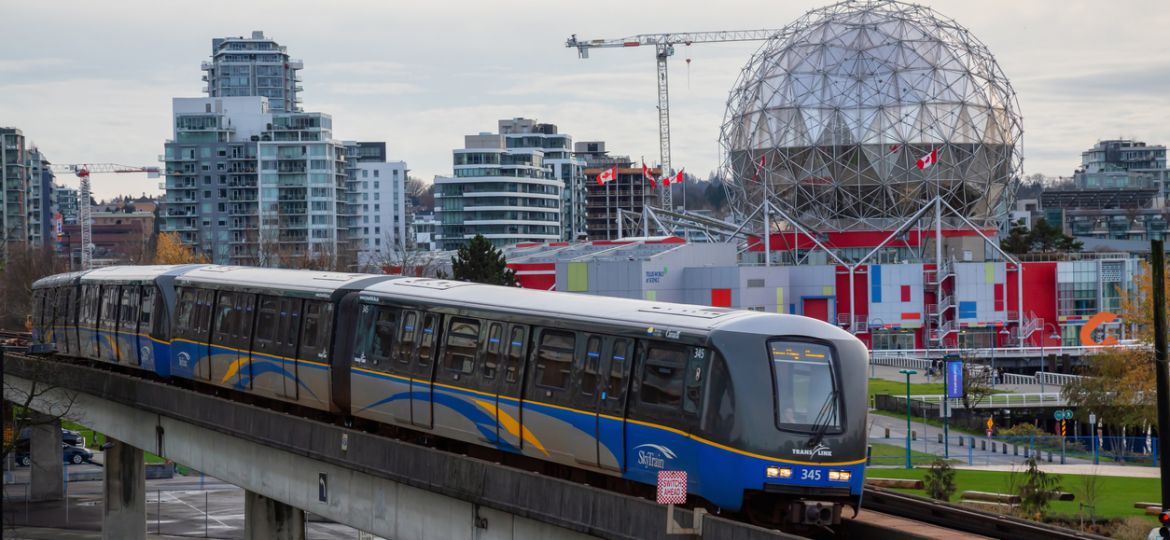
Beyond Rush Hour: What Transportation Access Looks Like Across Metro Vancouver
The region moves long before the morning commute and long after it ends. Jobs, campuses, appointments, neighbourhood trips and late-night journeys reveal how much transportation access depends on when and where a trip happens, and who is making it.
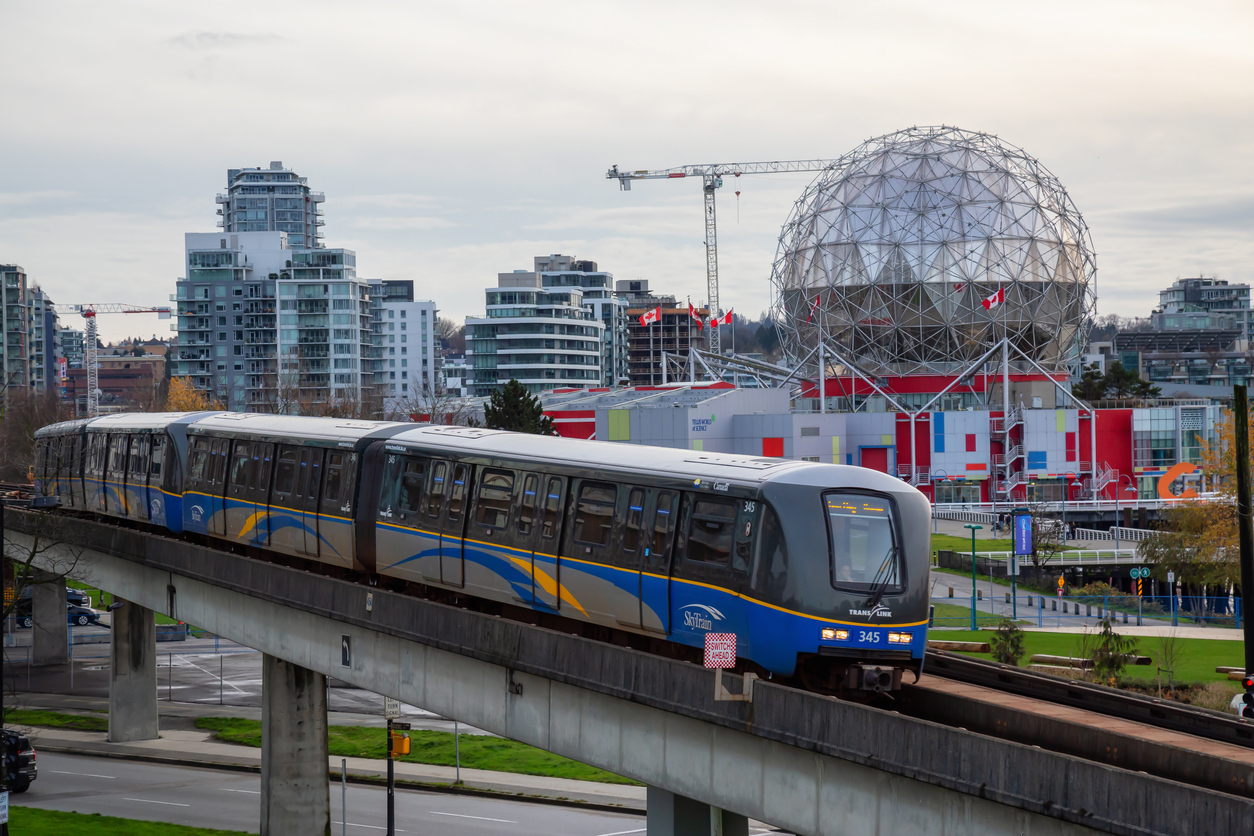
There is a familiar way of picturing transportation in Metro Vancouver. Morning traffic thickens, buses and trains fill, bridges become busy, and thousands of people make their way to work. Several hours later, much of that movement reverses direction.
Rush hour deserves the attention it receives, but it is only one part of the day. Before many offices have opened, people are already travelling to hospitals, warehouses, hotels, restaurants, construction sites and industrial workplaces. Later, students and employees begin converging on campuses. Around midday come appointments, errands, family responsibilities and social visits. Long after the evening commute has faded, people are still leaving work, finishing classes and finding their way home.
TransLink's 2023 Trip Diary estimates that roughly 8.8 million trips were made on an average weekday across Metro Vancouver in the fall of 2023. Those journeys include much more than the commute to work. People are also travelling to school, shopping, attending appointments, accompanying someone else, seeing friends, taking part in recreation and doing the countless ordinary things that make up a day.
Those millions of trips suggest a broader way of judging transportation. Peak-hour performance matters and so does whether people can reach the places that matter when their lives fall outside the conventional commute.
That can depend on frequency, service hours or the number of transfers required. Sometimes the difficulty lies in the last few blocks between a transit stop and the destination. For an older adult or a person with a disability, a single inaccessible connection may determine whether the journey works at all. In other cases, better access may come from putting daily needs closer to where people live rather than asking everyone to travel farther. The same regional network can work beautifully for one journey and poorly for another.
Before the Workday Seems to Begin
Industrial areas rarely dominate the public image of Metro Vancouver. They tend to sit behind highways, along riverfronts, near ports and rail corridors, or in parts of the region many residents pass without thinking much about what happens there. Yet they are central to the regional economy.
TransLink's 2025 Investment Plan notes that industrial lands account for about four per cent of the region's land base while supporting more than 25 per cent of regional employment, or more than 315,000 jobs. These areas accommodate industrial and trade-enabling activities, along with many of the day-to-day functions that keep the wider regional economy moving.
They have also historically been difficult to serve well by transit.
That creates a transportation problem quite different from an overcrowded downtown bus. The employment exists. The regional network exists. The difficulty is making the two connect in a way that works for the person trying to get to a shift.
Langley's Gloucester Industrial Area offers a current example. Beginning September 7, TransLink's new Route 556 will connect Gloucester with Langley Centre, becoming the first bus route to directly serve the employment area. TransLink expects Gloucester to support more than 7,500 jobs over the next decade.
The route makes a larger point visible. A job can exist somewhere in Metro Vancouver without being equally reachable by everyone who could do it. Distance matters, but so do the hour the shift begins, how often service runs, whether transfers line up and how far the final stop is from the workplace. A trip that is straightforward by car may take much longer by transit, or may not be practical at a particular time of day.
Metro Vancouver increasingly considers this relationship part of employment accessibility. Where jobs are located relative to housing and transportation influences commute times, the workers employers can reach and the opportunities residents can realistically pursue.
Transportation helps determine which jobs are genuinely within reach.
When a Campus Becomes a Regional Destination
A university campus is usually thought of as a place of learning. From a transportation perspective, it can behave more like a small city.
At UBC's Vancouver campus, about 80,000 transit trips are made to and from campus each day. Ten regional bus routes connect directly to UBC, carrying students, faculty, staff and visitors through one of the region's busiest educational destinations.
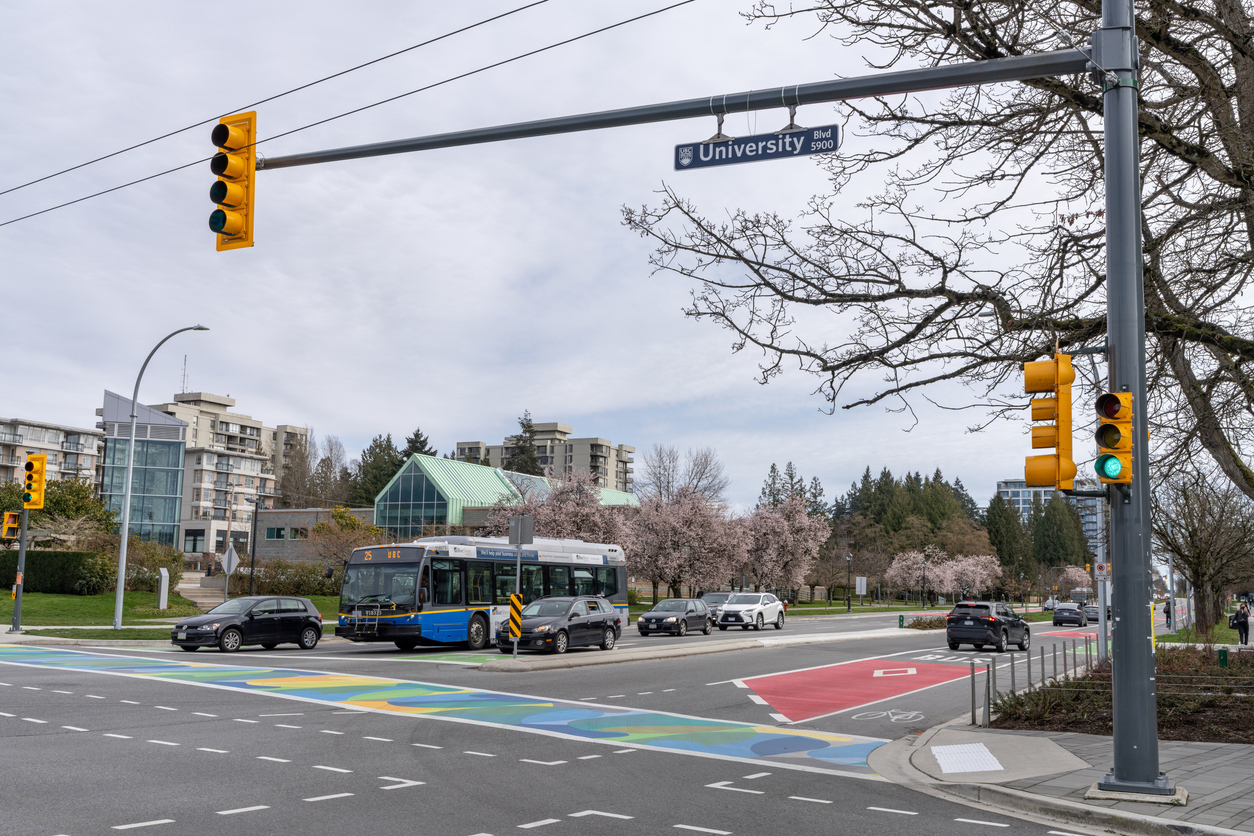
This September, the change in demand will be especially visible. As students and employees return to UBC, Simon Fraser University and Capilano University, TransLink is restoring additional trips on five routes serving those campuses.
A campus makes one thing particularly clear: transportation demand does not follow a single schedule. Classes begin and end throughout the day. Research, administration and campus services operate on different hours. Some students live nearby while others travel across much of the region. Libraries, laboratories, performances and evening classes keep people moving long after the afternoon rush has passed.
The transportation task becomes a day-long one, supporting thousands of overlapping journeys rather than a single morning and afternoon surge.
Hospitals, airports, shopping districts and other major destinations create similar patterns. Each has its own rhythm, and each places different demands on the same regional network.
The UBC example also makes a broader point about access to education. Opportunity does not begin at the classroom door. Whether a course, job or campus experience is practical can depend partly on the time, cost and reliability of getting there.
Midday Is Not Off-Peak for Everyone
"Off-peak" is a useful planning term. To the person making an important trip at noon, it means very little.
Around midday, people are travelling to medical appointments, day programs, shops, community centres, workplaces and family visits. Roads may be quieter and buses less crowded, but the journeys themselves are no less important.
Ageing makes this especially visible. In the City of Vancouver, people aged 65 and older represent 17 per cent of the population, and the City's Older Persons Strategic Framework includes the goal of helping people "get around with dignity."
There is no single older-person transportation experience. Some people continue to drive. Others rely on transit, walking, family members, taxis or several options at once. What often changes is the importance of details that were once easy to overlook: the length of the walk to a stop, the ease of a transfer, the timing of a crossing or the distance between the bus and the final destination.
HandyDART reveals another side of the same issue. In 2025, the service responded to more than 1.76 million trip requests and provided approximately 1.34 million trips.
These journeys are a reminder that transportation is not always about speed. Sometimes its value lies in making the trip possible at all, with enough reliability and independence for someone to participate in ordinary life.
That is why accessibility is difficult to understand through vehicles and stations alone. The whole journey matters: reaching the stop, understanding the information, boarding, transferring and navigating the final stretch at the other end. A timetable can tell us when a bus is supposed to arrive. It cannot tell us whether someone can safely reach it.
Sometimes the Best Trip Is the Shorter One
Transportation discussions naturally gravitate toward large systems: rapid transit, bridges, highways and major bus corridors.
But access can also improve when people simply do not have to travel as far.
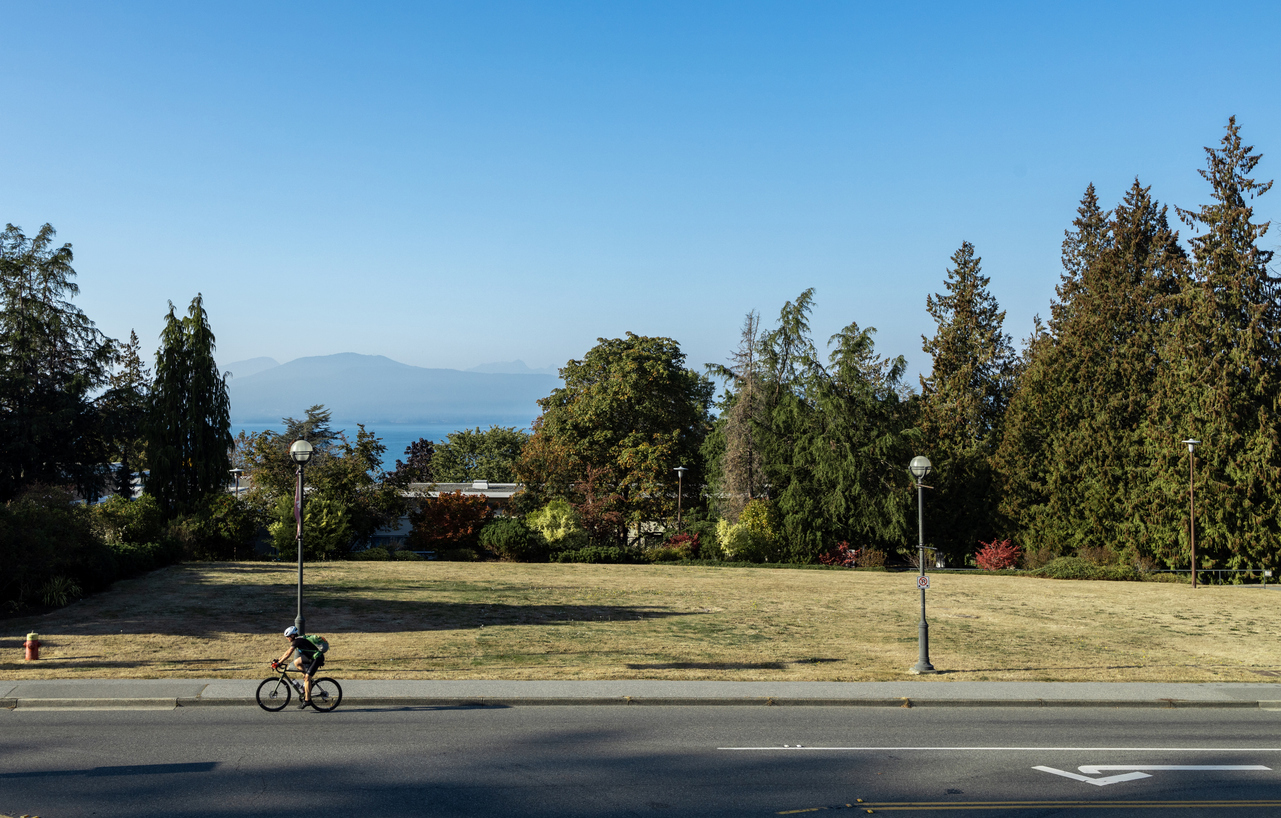
That idea sits at the centre of Metro Vancouver's approach to complete communities: places where people of different ages can live, work and reach many of their daily needs close to home. Schools, health care, parks, shops and jobs all become part of the transportation picture because their location determines how much travel is required to reach them.
A neighbourhood grocery store does not eliminate the need for transit. A local clinic does not replace a regional hospital. But proximity can give people more choices for some of the trips that make up an ordinary week.
That can make a considerable difference when time, cost or physical effort limits mobility. A short trip on frequent transit feels very different from one involving two transfers. A twenty-minute walk may be easy for one person and difficult for another.
Even the idea of "walkable" is more complicated than distance. Sidewalk continuity, crossings, terrain, accessibility and the mix of nearby destinations all influence whether walking is genuinely practical.
A neighbourhood can look close on a map and feel much farther away on foot.
A strong regional network must make long journeys possible. Good community planning can also make some of those long journeys unnecessary.
When the Evening Commute Is Already Over
Rush hour has a clear ending on transportation charts. People's days do not.
Restaurants remain open. Hospitals continue operating. Flights arrive. Classes and events finish. Hospitality, cleaning, security and other shifts come to an end. Students stay late on campus. People still need to get home, even as the transportation network begins to look different from the one they used during the day.
Metro Vancouver's NightBus network provides ten routes seven nights a week, generally every 20 to 30 minutes, connecting downtown Vancouver with destinations including Richmond, Surrey, Coquitlam, UBC, SFU and the North Shore.
It is an important service, but it is not simply the daytime network operating after midnight. There are fewer routes, lower frequencies and fewer convenient connections. A journey that is straightforward at 5 p.m. may require more planning several hours later. A route can serve the right destination and still be of little use if it does not operate when someone needs it.
TransLink also allows passengers on most bus routes to request a stop between regular stops from 9 p.m. to 5 a.m. when doing so would help them feel safer. It is a small operational policy that acknowledges something easily overlooked: the same journey can feel quite different after dark.
Late-night transportation also exposes the limits of judging service entirely by passenger volume. A bus carrying fewer people at midnight may still be an essential connection precisely because the alternatives are limited.
What the Timetable Cannot Tell Us
Transportation agencies need data. Passenger counts, schedules and trip surveys reveal where demand is strongest and how travel patterns are changing.
TransLink's Trip Diary, for example, recorded information on nearly 100,000 individual trips and helps planners understand millions of journeys across the region.
What those numbers cannot always explain is why a trip succeeds or fails for the person making it. A passenger count may not reveal that someone avoids a transfer because the walk feels unsafe. A route map can show an accessible connection without revealing a difficult intersection nearby. A timetable cannot explain why the position of a bus stop makes boarding challenging.
These are not shortcomings of data. They are reminders that numbers and lived experience answer different questions.
TransLink's accessibility advisory committees offer one example of bringing those perspectives together. Participants include people with disabilities, seniors, HandyDART users and people who support them. Their work has included Bus Rapid Transit station design, accessible facilities and the practical challenges created when bus stops and cycling infrastructure intersect.
A person who regularly encounters a transportation barrier may notice something that modelling alone cannot reproduce. An operator may understand recurring conditions that are invisible in a ridership total. Good planning needs both kinds of insight.
Data reveals patterns. Engineering and planning define what is technically possible. Operators understand how the network behaves from day to day. People using the system can explain where an apparently small detail changes the usefulness of an entire journey. Together, those perspectives show whether the network works in practice.
A Conversation That Includes More of the Day
Looking beyond rush hour does not make the traditional commuter less important. It simply makes the picture more complete.
It includes industrial workers travelling beyond the strongest transit corridors, students converging on campuses, older residents making midday appointments, HandyDART customers, people travelling home late at night and the shorter neighbourhood trips that become easier when daily needs are closer to home.
These are among the experiences being brought together at The Way We Move, a public transportation conference presented by ThinkCity Education Society on Saturday, September 5, 2026 at SFU Harbour Centre.
The programme includes perspectives from regional transportation planning, municipal engineering, public transit, accessibility, active mobility, age-friendly transportation, public policy and civic engagement. The audience is intentionally broad as well, reflecting the fact that transportation can look very different depending on age, ability, work schedule, location and mode.
Professional expertise and lived experience illuminate different parts of the same system. The difficult work begins where those perspectives meet, particularly when seemingly simple choices carry real trade-offs.
A one-day conference cannot settle Metro Vancouver's transportation future. It can create space to examine these questions alongside people who approach them from different perspectives.
Conference details and registration:
https://thinkcityeducationsociety.ca/think-city-events/
Access Does Not Keep Office Hours
It is easy to judge a transportation system at the moments when it is most visible: the crowded platform, the congested bridge, the packed bus during the morning rush. Those moments matter, but they are not the whole story.
The regional network is also being tested before sunrise, at midday and late at night. It is being tested on industrial roads, university campuses, neighbourhood sidewalks and in the final blocks between a transit stop and someone's destination. At times the challenge is moving thousands of people efficiently; at others, it is whether one person can make an important journey independently.
As Metro Vancouver grows, transportation access may be best understood in practical terms: the ability to reach work, education, care, family, services and community when those things are actually needed.
The region does not move on one schedule. Neither do the lives of the people who call it home.
Frequently Asked Questions
What does transportation access mean?
Transportation access is the practical ability to reach the places people need to go, including work, education, health care, services, family and community activities. It involves more than whether a road or transit route exists. Travel time, frequency, service hours, transfers, accessibility and the distance between a stop and the final destination can all affect whether a journey is genuinely practical.
How many trips are made in Metro Vancouver each weekday?
TransLink's 2023 Trip Diary estimates that roughly 8.8 million trips were made on an average weekday across Metro Vancouver in the fall of 2023. These trips included commuting as well as travel for school, shopping, appointments, recreation and other daily activities.
Why is transportation access important for employment?
A job may exist somewhere in Metro Vancouver without being equally easy for every potential worker to reach. Employment access can depend on where jobs are located relative to housing, transit, roads and other transportation connections. Service hours, frequency and the final distance between a transit stop and workplace can also affect whether a job is practically accessible.
Why are industrial employment areas important to transportation planning?
Industrial lands occupy a relatively small portion of Metro Vancouver but support more than 315,000 jobs and more than one-quarter of regional employment. Some industrial areas have historically had limited transit access, which can reduce the transportation choices available to workers.
How important is public transit to UBC?
UBC reports that about 80,000 transit trips are made to and from its Vancouver campus each day. The campus is served directly by ten regional bus routes, making it one of Metro Vancouver's major transportation destinations.
What are complete communities?
Metro Vancouver uses the term complete communities to describe places where people of different ages and circumstances can live, work and reach many of their daily needs close to home. Housing, jobs, schools, health care, parks, shops and transportation connections all contribute to how complete and accessible a community feels.
What is NightBus?
TransLink's NightBus network provides late-night transit after regular SkyTrain service ends. Ten NightBus routes operate seven nights a week, generally every 20 to 30 minutes, connecting downtown Vancouver with several destinations across the region.
Why does lived experience matter in transportation planning?
Transportation data can show where people travel, when trips occur and how services perform. People using the system can provide a different kind of information: where transfers feel unsafe, which barriers make a journey difficult, or how a small design detail affects accessibility. Effective transportation planning can benefit from both technical evidence and lived experience.
What is The Way We Move?
The Way We Move is a public transportation conference presented by ThinkCity Education Society on Saturday, September 5, 2026 at SFU Harbour Centre. It brings together transportation planning, accessibility, active mobility, age-friendly transportation, public policy, civic engagement and the experiences of people who use the regional transportation system.
Further Reading
The following public sources provide additional background on transportation access and the regional issues discussed in this article.
TransLink 2023 Trip Diary Survey
Regional research into when, where, why and how Metro Vancouver residents travel.
Metro Vancouver Residents Are Walking and Cycling More, Driving Less — TransLink
A public summary of findings from the 2023 Trip Diary, including the estimate of approximately 8.8 million average weekday trips.
TransLink 2025 Investment Plan
Regional transportation investments and planning, including expanded service to industrial employment areas and growing communities.
Fall 2026 Service Changes — TransLink
Information on new and expanded service beginning in September 2026, including Route 556 to the Gloucester Industrial Area and additional post-secondary service.
UBC Transportation: Transit
Information about public transit serving UBC's Vancouver campus and current daily transit use.
Older Persons Strategic Framework — City of Vancouver
Vancouver's framework for supporting older residents, including mobility, accessibility and the ability to get around with dignity.
https://vancouver.ca/people-programs/older-persons-strategic-framework.aspx
Managing the Transit Network: HandyDART — TransLink
Current performance information for HandyDART, including trip requests, trips delivered and registered customers.
Complete Communities and Urban Centres — Metro Vancouver
Regional planning information on walkable, transit-oriented communities where people can reach more daily needs close to home.
https://metrovancouver.org/services/regional-planning/urban-centres
Walkability Index — Metro Vancouver
Regional measures examining factors such as sidewalk completeness, street connectivity, residential density and land-use mix.
NightBus — TransLink
Information about Metro Vancouver's ten-route late-night transit network and request-a-stop programme.
Transit Accessibility Advisory Committees — TransLink
Information about how people with disabilities, seniors, HandyDART users and others contribute lived experience to transportation planning.
https://buzzer.translink.ca/2026/08/join-our-transit-accessibility-advisory-committees/
Continue the Conversation
The Way We Move
Saturday, September 5, 2026
9:30 a.m. to 3:00 p.m.
SFU Harbour Centre
515 West Hastings Street, Vancouver
Conference programme and registration:
https://thinkcityeducationsociety.ca/think-city-events/
